Thursday, April 16, 2009

Lag Bolts vs. Lag Screws

Top: lag bolt.
Bottom: lag screw.

Please don't interrupt me.

I've decided to implement a zero-interruption policy for myself. It seems like a small thing, but I think interruption is a more serious problem than most people realize. If you are having a meal with a big group of people, or are at a meeting - pay attention to how often a person can finish a thought before someone interrupts. Here at Maggie's, it usually doesn't take more than ten minutes before five people are talking at once.

I've been trying to pay close attention to my own interrupting habits over the last few days. I tend to interrupt most when:
1. I think I know what the other person is going to say.
2. I am excited about what someone is saying and am impatient to respond.
3. I am thinking about what I am going to say instead of listening to the other person and can't wait to say it.
4. I know the same piece of information the other person is sharing, and, for some reason, want to say it myself.

So, in the interest of building community, being kind, paying attention, taking up less space, learning from the people around me, engaging in real conversation, slowing down, and actually listening to people, places and creatures, I am not going to interrupt anymore.

I'll keep you updated on my progress.

Wednesday, April 15, 2009

Useful Stuff

Ever wonder what the difference between a lag bolt and a lag screw is? I thought so!

A lag screw works in the same way a regular screw does - the threads on the screw bite into the wood and keep it in place. Like a bolt, it has a head on top, usually a hex.

The threads on a lag bolt do not catch the wood. Instead, you pre-drill a hole, slide the bolt through, and sandwich the bolt with nuts on either side. The threads are only there to hold the nuts in place.

Will and I spent the morning repairing the tongue on our mobile chicken tractor. It was originally made with wood, which broke last season, so we are replacing it with metal. The design is simple: today we cut two metal plates and drilled holes in them. The plates with be welded to a metal tube (the body of the tongue), and we will attach the plates to two-by-fours on the frame of the coop with...you guessed it...lag bolts!

We are about a third of the way through this process. Tools involved so far have been: an impact driver with a ratchet attachment, a hammer, two pairs of channel locks, a monkey wrench, a drill and two different sized bits, a skill saw with the metal-cutting blade attached, the wire brush, and a hand-held grinder. We haven't even gotten to welding yet.

It takes a lot of different bits and pieces to run a successful farm!

One Million Things I Love

Last summer, I made the somewhat rash announcement that I could name one million things I love. My housemates thought this was an impossible feat. I decided to find out. The point, I realized, is not to write down one million things I love, but to revel in detail. It is an exercise in paying very close attention. So here they are, numbers 1-25.

1. Aunt Ruby's German Green tomato
2. 100 Years of Solitude
3. apples and honey
4. ekutus (Ghanaian oranges)
5. really good roast chicken with garlic and herbs
6. jars of home-canned tomato sauce on wooden pantry shelves
7. baked onion and cheese soup
8. Ave Verum Corpus
9. yellow onions in the sunlight
10. fresh sage
11. sunlight on wooden floors
12. a pot of Russian caravan tea in the late afternoon
13. hard cold October rain
14. apple cider
15. the first planting of the season, and the sweet soreness in my muscles afterward
16. drinking beer and listening to the Red Sox on the porch in early summer
17. fresh black ink drying on white paper
18. The Old Man and the Sea
19. homemade pumpkin butter
20. the cottonwood tree at Knoll Farm
21. roasted red peppers
22. cumin
23. fresh-caught grilled bluefish
24. A Moveable Feast
25. napping in the sun in early spring

I love farming!

Isn't it obvious?

Detail

The weight of cold water in two buckets, the familiar ache in my muscles, every day, the sun just up, walking down the lane to the edge of the woods, the clear cascade of water into the pigs’ trough, their little grunts, the trees behind me orange with sunlight, the sky diamond-blue over Tully Mountain, wind in my face, the scent of spring hay and old barn, chickens talking, cows eating, early morning.

Photos


A Partial List of What I've Learned This Year

How to slaughter and eviscerate chickens, how to water a greenhouse, how to plow the driveway with the tractor bucket, how to sharpen a knife, how to build a hot bed with horse manure, straw bales, and plastic, how to prune raspberries, blueberries and grapes, how to tie a sheet-bend and a bowline, how to rearrange a poorly positioned lamb inside the ewe, how to pick a horse's hooves, how to ear tag, administer a subcutaneous injection, and dock and castrate lambs with an elastrater, how to take an animal's temperature, how to hand milk a cow, how to harness, hitch, and unhitch a team of draft horses, how to make butter in a mason jar, how to make mozzarella cheese, how to trim sheep hooves, how to fell, buck and limb trees, how to seed peas and spinach with a tractor, how to attach and detach tractor implements with the three-point hitch, how to approach animals without scaring them, how to make lacto-fermented sodas, how to read a soil test, how to sharpen a shovel.

The difference between first, second and third cut hay, what cation exchange capacity is, the ratio of carbon to nitrogen in a healthy compost pile (30:1), what to do if you wake up in the middle of the night and one of your ewes is dead, the ideal pH for growing most vegetables (between 6.2 and 6.8), that even after spending a month in Italy, I still think New England is the most beautiful place on earth, why you sometimes find brown, rotted-out spots in the center of otherwise healthy-looking broccoli (due to a boron deficiency), that goats can escape from almost any fencing set-up, and how to get them back (spend an hour at least chasing them, calling them, and attempting to lure them toward you with grain), why no-till and limited-till systems are good for your soil (less compaction), that insulated muck boots are worth every penny of the $70 I paid for them, what a hoggit is (a yearling sheep that hasn't been bred before), what it means when a farmer says a cow is about to freshen (give birth), that it is not easy to age Camembert cheese in a Tupperware container in your basement (but worth trying), that raw milk is 100 times more delicious than pasteurized milk (it actually has flavor!), why it is so important that a mama ewe licks her baby immediately after it is born (not only to warm it up and dry it off, but because the licking actually stimulates the lamb's instinct to suckle), the proper depth for planting seeds (twice the width of the seed), how important it is to sweep the kitchen floor daily, and that my favorite hours of the day are between five and seven in the morning.

To be continued.

Spring!


Spring is on its way. Our first planting of peas and spinach are in the ground, and both have germinated. (A discovery made after a couple minutes of digging around in the soil looking for the seeds. After he found a few fat green pea seeds with little roots trailing off of them, Nate said we should probably be patient and let the plants do their own thing. But digging around in the soil is one of the best things about farming!)

Our greenhouse is full. Lettuce, fennel, radicchio, celeriac, lots of flowers, peppers, eggplant, and tomatoes! And our cold frames are full, too - beautiful leafy brassicas (kale, collards, kohlrabi, broccoli, cabbage), swiss chard, and lots lots of onions, slated to go into the ground at the end of the week.

We have eleven lambs tumbling around the barn. If you haven't seen a week-old lamb jump a foot in the air just for the hell of it, you owe yourself a visit to Maggie's and a hour in the sun with these small, sweet, perky creatures. Their names, in case you were wondering, are: Buster Baker, Sugar Magnolia and Garcia (first triplets born a few weeks ago now), Henry and Pearl (the biggest, healthiest, funniest little white lambs we have), Birch and Ash (black and white twins), Lucy and Lana (black twins), little Athena (whose poor mama had a difficult birth - first i had to rearrange the lamb inside her, and then it took two of us pulling with all our strength to get her out), and Rose, the sweetest newest addition to our crew of lambs.

We still have three ewes hanging on to their babies, and we've lost one. Though you wouldn't know it to watch the lambs frolicking in the sun and nosily suckling on their mamas, we have had our share of hardships this season. It stated when #30, our oldest ewe, had a bad vaginal prolapse. A prolapse is when, due to an enormous about of pressure on the cervix, the tissue of the vagina is actually turned inside-out and falls out of the ewe. I happened to be on chores when this happened, and twice I pushed the whole mess of tissue back inside, but it kept falling out, so we called the vet, who stitched her up. #30 gave birth to three healthy babies, who are doing great, but she prolapsed again a few days later, which is very uncommon. She's still stitched up, and we're hoping she'll last through the summer, but the poor girl is in rough shape.

One of the problems with sheep is that they have been overly domesticated, and over hundreds of years, overbred for certain qualities: to have two or three (or four) lambs, to have big babies, and to to have good carcass quality. All this overbreeding has led to more complications during pregnancy and birth, as well as the tendency of mamas to reject their babies and not let them suckle. Luckily, there are a some wilder, less domesticated breeds out there, such as the Icelandic, who tend to have less of these problems.

The worst thing that happened this season was losing #32 and the babies (at least two) she had inside her. I woke up in the middle of the night to voices in the hall, and went out to the barn expecting a birth. Instead, there was a ewe lying on her back, dead, with all her intestines spilled out on the ground. Needless to say , it was a terrible, shocking hour. It took four of us to lift her up and get her out of there. In the morning, Jennifer called the vet, who said most likely what happened was that one of her lambs, kicking, actually ruptured the wall of the uterus. This is rare, but it can happen when a mother is carrying so much weight in lambs that the uterus gets big to accommodate them all, the walls thin out, and when a lamb kicks, it can puncture the whole organ. When this happens, there is nothing you can do.

Farming is not easy, or comfortable, and it certainly isn't always fun. But there are chives up in the garden, daffodils blooming already, and the peepers are singing at dusk. Yesterday we raked the mulch of the strawberries to let the light in, and I've been eating almost all meals on the porch. Mud season is just about over; the cow paddock is walkable (sort of). Last week we heard the ground thawing, water moving under the soil. The forsythia is greening up, and the maple buds tint the forest red. Best of all, our garlic is up! A half-acre of tiny green shoots poking through the straw, who, like us, have survived a long winter.

No, farming is not easy or comfortable. Springtime brings death along with the mess of greenery, the frisky lambs, the longer days. But spring on a farm is the best place to be. And if you're lucky enough to be me, being on a farm is always the best place - the only place - to be.

Tuesday, April 14, 2009

New England is the most beautiful place on earth.

Spring: peepers, pale golden sunlight, brooks running again, red maples with buds that turn the tops of the forest red, forsythia, green-tipped crocuses, that sweet evening smell of hay and dirt and water waking up, misty grey rain, apple blossoms, this year's fresh maple syrup, greens again, high, clear, gentle skies, that first day of sunshine, the snow still blanketed in the deep woods, when you take off your jacket and feel the warmth on your skin, wind that sings and doesn't bite, spotted salamanders in vernal pools, hunting for ramps and wild asparagas, the sunrise orange and brilliant and earlier every day, the peepers, the peepers singing all through the dusk.

Summer: rambling in the green woods, the light filtering through beech trees, mossy stone walls flooded with sun, cold sparkling creeks, grass as tall as your waste, fields of red clover, sunflowers, hard blue thunderstorms pounding on the roof, sweet corn minutes after harvest, silver dew on red russian kale, shelling peas on the porch of a 200 year-old farmhouse, sheep on pasture, concerts on town commons, white church steeples against the deepest, bluest sky, brown dirt roads, sugar maples in full leaf, late afternoon light on everything it touches (your hands, a crate of tomatoes, a loaf of bread, an apple tree loaded with fruit, honeybees, worn-down pickups, water), the scent of basil everywhere, little farms surrounded by woods and streams and old fence posts rotting in the soil, meadows full of insects, bare feet, dark, beautiful topsoil that crumbles in your hand (even if there isn't much of it).

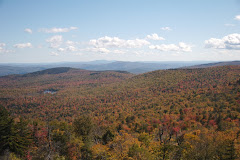
Fall: the leaves, the leaves, the leaves, brilliant red sugar maples and golden beeches, oak and birch and sumac the color of sunset, hard blue days that smell like frost, apple pie, fresh cider, early darkness, Orion again, hard golden sunsets that leave your heart aching, the silver stream of your breath on cold mornings, pumpkins and acorn squash and golden beets and frost-sweetened carrots, stars so sharp and silver they sting, and the darkest nights to see them in, the smoke the rises from the chimneys of little houses in the woods, the vee's of geese flying south, the smell at dusk, hay-sweet, musty and sad, bittersweet, October rain tunneling against the window glass, the whole earth quieting down and curling up, the smell of cinnamon and cloves, bread baking, pumpkin pie, squash soup, bags of yellow onions, braids of garlic, and everywhere in the woods the leaves, little hearts, shimmering everywhere as they fall.

Winter: the color of cold that sharpens everything, bare branches against blue skies, black ice, frozen creeks, snow falling silently, the tracks of deer and birds and foxes through the quiet fields, clear nights, the light that comes back in January and dazzles you, sunlight on snow, frozen kale veined with ice, the smell of woodsmoke, Sunday afternoons cooking soup, the shape of the land under the snow, hilly and fierce, the still woods, being able to see the shapes of the trees, brown beech leaves rattling in the wind, darkness that seeps into the house and stills the heart, and yellow windows, the heart's defense, sharp, thin, blue shadows on the snow, lights in the trees, the smell of pine, evergreens, snowstorms that blur the edges of the world.

Tuesday, November 18, 2008

Irrational Love?


This afternoon we brought the cows in for the winter. The day was perfect: cold and windy, clouds shifting across a grey-blue November sky, the light hard and golden on the pastures. We'd been inside all morning, and it felt great to get out into the brisk today and use our muscles. To bring the cows back, we had to run them from the pasture they were just on, about a mile up the road, across five pastures and two roads. This involved a rather intricate fencing design, involving lanes for them to follow through some pastures, two holding pens where we could regroup them before road crossings, and a total of 11 people, herding, luring, road-blocking, and gate-opening.

After an hour and a half putting up fencing, we gathered at the farm to make a plan, split up, and took our positions. The move was easy. It was a gorgeous day to be running behind a herd of 12 cows, across a swath of fields that I have come to know well over the course of a month. The only escapee was one of the frisky calves, at a tricky corner, but we calmly herded her back into the lane and into the cows' permanent winter residence. They'll be living in a paddock adjacent to the barn, with plenty of good hay and shelter if they want it, until the beginning of May.

The afternoon ended on a more solemn note, when the trailer arrived to take the bull back. We rented a bull to breed our cows for 45 days, and his stay with the herd is over. The man in charge of the trailer was harsh and rough, hitting the cows and the bull with fiberglass fenceposts and yelling at them sternly. I don't know if this is common practice, but it didn't sit well with me. At one point, Pride, our sweet dairy cow, was right in the middle of the action, walking calmly into the trailer where we were trying to get the bull. She is used to being handled, and, to my knowledge, not used to harsh treatment.

All of my own dealings with the animals since I've been at Maggie's have been calm, quiet, and gentle. I've watched the farmers here herd cows, catch sheep, and work horses, always with respect, always kindly, and always with dominance and strength. I am no expert on animal handling, and getting a 1200-pound bull into a trailer is not an easy task. But it was hard to watch such gentle, sturdy creatures being treated in a way that, to me, seemed disrespectful.

After the bull was gone and the herd calmed down a bit, my first reaction was to go to Pride and comfort her. Who knows if she was scared or traumatized. She hasn't spent any time with the herd, so for her, it was all new. I didn't realize until today how much I've come to love her. She is sweet and patient, sometimes feisty. She has her own personality. She never stands still when you're milking her. She gets lonely. And sometimes she nuzzles me with her long face and big brown eyes. These are all things I love about her.

A month and a half ago, I didn't know these cows. Now I feel protective of them, especially Pride, who, this week, I am milking every day. I love hanging out with the herd, listening to them eat, getting to know each one with their distinctive quirks. I didn't realize how much I would come to love these animals and appreciate time spent with them.

Is it irrational to love a sweet, 4-year old Jersey dairy cow? Or an orange cat who lets me pick him up and purrs in my arms at least five times a day? Is it irrational to love a ram lamb named Lincoln with the softest fleece on the sides of his ears, who nibbles my sleeves when I go out to say hello to him in the pasture? I don't know. I don't think so. What I do now is that our relationships with domestic animals are not as simple as I once thought. Every day I learn something new about an animal. Every day I have a moment, walking Ruby Star out to pasture, or leaning against Pride's warm side as I milk her, when I know that this daily contact with non-human creatures is changing the way I see the world. I think it's a change worth paying attention to.

The Slaughterhouse

Yesterday we drove three hours north to Fair Haven, Vermont to visit Over the Hill Slaughterhouse, where we take most of our animals to get killed and butchered.

The actual experience was less horrible than I thought it would be. I was prepared to be so revolted by it that I would have to reconsider raising animals for meat. And while it was somewhat disturbing, and definatley hard to watch an animal be killed, I was surprised at how...okay...I was with much of the process. It raised a lot of questions about the act of killing, and what it means to raise animals for that specific purpose.

Visiting the slaughterhouse was the first thing in a while that has made me rethink my basic philosophy about eating meat: if I know the farmer, and approve of her methods, I'm happy to eat meat now and then. I enjoy it. Yesterday brought into clear relief the fact that the life of the animal isn't the only thing I have to consider - the way in which it is killed is just as important.

Over The Hill is a small slaughterhouse. They kill and process 15-20 cows per day at most. We saw the kill floor, the two cooling rooms (one where the animal hangs directly after slaughter and one larger and warmer room where the carcasses hang for 7-14 days.), and the butcher room where a team of about 5 actually cut up the meat.

We saw two pigs killed while we were there. Over the Hill, which is certified by the USDA and the Humane Slaughter Act, uses the captive bolt method to stun the animals and render them unconscious. The air-compression gun is fired once somewhere on the animal's head, which renders them unconscious to pain. They are then cut, bled, and hung. It was incredibly disturbing to watch this process, especially since pigs' nervous system convulse and spasm after they are dead.

By any standards, Over the Hill is a clean, humane slaughterhouse. The workers were good with the animals - not rough, but not reverent, either. The animals come in one at a time to be shot. However, I couldn't help thinking how much worse it would have been if I had been watching a cow or lamb I knew and raised to shot and cut so quickly. What disturbed me the most was the mechanization of it, and the lack of reverence and respect.

Overall, the trip raised more questions than it answered.

Can I eat something that isn't beautiful? This struck me the minute I went into the butchering room. I see the beauty in a basket of tomatoes and peppers. But the carcasses hanging in that room did not strike me as beautiful.

When did the tradition of ritual killing become grotesque (or has it always been)? The killing of animals is deeply rooted in our history. In my heart, I believe at one time it was less brutal and more reverent. How can we bring that mindset back into our culture?

What struck me the most was this feeling that death should be a ceremony. I do not believe that the purposeful killing of animals should be mechanized, industrial, or common. It should be done with humility, reverence, and ritual. I was surprised that this was what bothered me most about watching the a pig killed. Not entirely the death itself, but the routine of it, the quick transition from the act of death to the next bit of work. It is not a judgment on the slaughterhouse or the folks who work there, but on the ways in which killing seems acceptable to us. It is no small thing to take away a life. If I ever raise animals for meat, I want that knowledge to permeate the entire process.

I do think that animals raised for meat have a place in whole, healthy agricultural systems. But the killing of those animals is more complex than I ever realized before. Good systems are genearly fundamentally quiet, unobtrusive, and beautiful. As I think about what kind of future I want to make for myself in this world, I am gaging everything I do by those standards. Even if I raise sheep and cows on good grass, use their manure to nurture my crops, and let them live out their lives in the clean sunshine as they were intended to, it is for nothing if their deaths are not quiet, respectful, and purported with reverence.

Sunday, November 16, 2008

One-Straw Wisdom

"An object seen in isolation from the whole is not the real thing." -Masanobu Fukuoka

Savory Vegetable Pie for Cold November Nights

The soul of fall in flaky crust.

For the crust:
1 cup butter
2 cups wheat flour
cold water
salt

In a large mixing bowl, cut the chilled butter into the flour. Being sure never to let your palms touch the butter, gently mix with your fingertips until the mixture resembles coarse
grain. (If the butter gets too warm, it will melt before the fat globules properly bind to the flour, resulting in a flat crust.) Periodically dip your fingers in the ice water to keep them cool. Once the butter is well-mixed, pour in the cold water, a little bit at a time, until the dough holds together. Knead into a ball and let rest in the refrigerator.

For the pie:
1 medium winter squash (I used butternut)
1-2 heads garlic, separated into cloves
olive oil
salt and pepper
butter
4 medium leeks
2 shallots
a splash of red wine
½ cup pine nuts, toasted
1 ½ cups cheddar cheese, grated

Cut the squash into small chunks, and throw it in a baking dish with the whole garlic, olive oil and salt and pepper. Roast at 450 for 30-40 minutes, until soft.

Slice the leeks thinly. Mince the shallots. Sauté in a little butter until the leeks are translucent and just starting to brown. Add the wine and cook until the pan is dry.

Toss the leeks with the squash and pine nuts. Mix well. Roll out the crust and pour in the vegetable mixture. Top with a thick layer of cheddar cheese. Bake at 400 for 30-35 minutes, until the crust is brown and the cheese is bubbling.

Eat warm, with sautéed kale and, if you are inclined, a good brown ale.

This recipes makes two pies. Trust me, you’ll want one the next day.

A Foodist's Credo


(A partial list brainstormed on a cold, grey morning in the middle of November.)

Food is whole and simple and accessible.

Pleasure and nutrition cannot be viewed separately. (Fukuoka)

Food is an embodiment of place. We, as people, are an embodiment of the places we inhabit. Our food, and the way we grow it and eat it, is an embodiment of the health of the place.

Eating is community-centered. Food is shared. Food is always a celebration.

Food has story.

Children know how to harvest carrots and potatoes. They know that beets and peas and beans and wheat come from the earth.

Food is always a celebration, always shared. There is enough. Not too much, but enough. Enough is a family around a wooden table, a bowl of greens, a loaf of bread, fresh milk. Enough is knowing that the food we are eating is nourishing our muscles and our spirits, the soil and the air and water of our homes. Enough is not a lot. It is a little security, and some good, hard work. Enough is the daily harvest of squash and basil.

We have enough time to eat. We have enough time to cook. We have enough time to kneel down outside in the fields.

We grow food in a way that enriches the earth. We raise animals in a way that enriches their lives. We forage, hunt, and fish in a way that enriches the wilderness. Growing food is one of the ways we take care of the earth.

Communities are structured in a way that enables the communal sharing of eating and cooking, and the work that goes into it. People come together to eat.

We bless our food.

Not everyone is a farmer, but everyone knows a farmer.

Public education includes the teaching of the following skills: basic gardening, baking bread, composting, cooking vegetables and grains, taking care of domestic animals.

Good food is affordable.

Farmers can afford to give away food. Baskets of onions and garlic, crates of winter squash, bins of lettuce.

Eating is not intellectual. We don’t have to analyze our food. Instead, we take pride in knowing where it comes from, how it got there, and why we put it there or found it there. Food is not complicated. It is not pumped full of chemicals and synthetics. It comes from the dirt. We eat what feels good, what tastes good, what keeps us healthy.

We eat with the seasons. Our food ties us to the land we call home. By eating, we do not cut ourselves off from the natural cycles of the earth, but rather, see ourselves as a vital part of those cycles.

Food is regional and specific. We know who we are, who our people are, where we come from, because of our food. Food is part of our story. It is at the center of our story.

We welcome everyone to the table.

We take joy in the work of growing food, the preparation of food, and the celebration of eating food. Eating is not a burden.

We eat with gratitude and wonder.

Tuesday, November 11, 2008

November


I love the bare trees and the wind that blows through my skin, wind that blows right into my heart. I love waking up to the hardest gold streaked across the sky and the pink that lingers in the folds of cloud till mid-morning. I love the hundred shades of grey in every day. I love walking through November fields, oats and peas just starting to brown, withered grasses, bare soil the deepest earthen black. I love the way the sky deepens and hardens and the way grey penetrates everything: the house, your boots, the trunks of trees, the edges of pastures, stone walls, hands.

I love the early dark. I love the white moon that rises early and sets late. I love the hardy rows of kale and collards, frosty but strong, parades of dull grey in bright relief against the bleak shades of November. I love the bleak shades of November and the landscape they reveal. I love the way it feels walking through woods bare of leaves, the forest empty and still, the curves and turns of the land finally visible. I love being able to look through slim trunks to distant mountains. I love the shapes of ash and maple and birch.

I love the work of November. Turning beds, spreading compost, mulching. Taking stock, putting away, tucking in. I love harvesting for winter storage: parsnips, carrots, beets, rutabegas. I love how a farm slows down and softens in November. How the land stills, naturally preparing itself for sleep.

I love the starkness of the time between the golden leaves of October and the long snow of December. The bittersweet and pine, the brown roads, the pale white skies, the blazing golden sunsets. The stars brighten in November. The earth fades into deeper shades of itself. My heart slows, and strengthens, and opens to meet the endless space of the naked woods.

Thursday, October 30, 2008

Late October at Maggie's Farm

Frosted Chard and Kale.

Drying Corn.

Corn Harvest.

Classic Late Fall Sunrise.

A Successfully Felled Tree.

Shimmering Leaves.

Knotty Pasture Apple.

Fencing.

Moving the Cows.

More Shimmering Leaves.

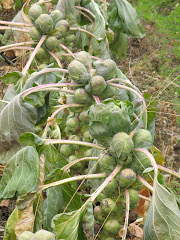
Armies of Brussels Sprouts.

Truck Full of Chard.

Morning Carrot Harvest.

Soup


Lentil soup with onions and garlic. Carrot-parsnip soup with honey and fresh cream. Cauliflower and cheddar soup. Spicy vegetable soup with potatoes and carrots. Pureed root soup with cheddar cheese. Potato-leek soup. French onion soup with crusty bread and good cheese.

My diet these past few weeks has been mostly soup. This week I've had soup every day for lunch, and a couple nights for dinner, as well. Not only is it easy and endlessly variable, but there is something absolutley essential about coming in from the cold every afternoon to a house scented with the rich steam of hot broth, garlic, and onions. After a morning of working muscles, wind-blown faces, dirt-encrusted hands, and the weathered handles of forks and shovels, there is nothing better than a bowl of heart and bone-warming soup.

Lunch at Maggie's Farm is a communal endeavor. Every day one or two people are responsible for making lunch for the whole crew. Though there are no formal rules about it, we seem to have soup four days out of five. I never get sick of it. In the fall, it is one of the few things I want to eat: good soup, roasted roots, and greens are the mainstays of my diet.

I truly believe that good food, food that comes from earth you know, is an essential ingredient to health and happiness. Soup has been a huge part of my experience here. It sustains me and reenergizes me in the middle of the day, warms me inside and out, and connects me to the land where the vegetables and meat that go into the pot each day are grown.

I am trying to do big things with small details. Keeping the land healthy begins with reaping its bounties. Lives are made up of light on grass, familiar hands, frosty mornings, pots of soup. These are the things we touch and see and taste every day. They have a lot to teach us about how to live our lives, how to walk on the earth, how to communicate with other creatures. Even a bowl of steaming fall soup, seemingly unimportant, can become a catalyst of change.

Saturday, October 25, 2008

Grey Days...

...are good for making vegetable stock, pickling beets, and watching the clouds break apart as they move across the dark sky, letting ribbons of light into the fields. Grey days are good for settling down, thinking hard, letting go. Potatoes, parsnips, celeriac, rutabaga, onions. Leeks, garlic, chard, peppercorns. Water, olive oil, salt and pepper. Grey days are good for chopping and simmering. Harvesting fresh sage and oregano from the brown garden under skies harder than slate. Grey days are good for writing in the corner by the window while stock simmers on the stove. Creamy parsnips and red potatoes, deep green chard, onions pale and thin as half-moons. The scent fills the house, keeps the heat in, keeps your heart from saturating with the sadness of the bare trees and the heavy horizon. Grey days are good for telling secrets, for storing up. Pantry shelves lined with half-gallon jars of sweet pickled beets and garlicky carrots. The sound of the back of the knife breaking garlic cloves. A pot steaming with roots and stems and alliums. Enough good broth to last for many cold months. Grey days are good for silence. They’re good for afternoon naps and thinking walks. The backbone of November. Vegetable stock and naked trees, golden leaves blowing across brown pastures, skies shaped like bone.

Friday, October 24, 2008

Ten Reasons I Love Chores

1. Working through the twilight hours. Getting up when the eastern sky is still shadowed, walking out to the coop in the pasture as the gold grows on the horizon. The crescent moon still glowing in the sharp blue sky. Frost on the garden and the raspberry bushes, and my feet crunching over all that silver as I walk through the pasture. New sun that turns the still-orange trees crisp-edged shimmering. At the end of the day, dusk falling over the farm, the stillness the sun leaves behind as it slips away, the brisk wind and the sky deepening slowly into darkness.
2. Talking to animals.
3. The routine of it. My feet learning the quickest path between the three coops, my fingers becoming familiar with cow fencing, my eyes growing accustomed to counting sheep accurately as they graze. I like the way chores bracket my day. I like knowing there are creatures counting on me for food and water.
4. Simple hard work: carrying 40 pound bags of feed over my shoulder, pouring buckets of cold water into the cow's trough, breaking the ice off the chicken's waterers, shoveling half-frozen manure. Using my muscles.

5. Well-earned exhaustion.

6. I love the level of detail that animal care requires. I love walking out to the coop each night, singing my way through the dusky pasture, to close the chickens safely away from foxes and coyotes. Going to check on the cows at noon, simply to make sure they have enough water and grass, pausing in my work to scratch PB, our sweetest cow, or tell a sheep a joke. I like being exact and careful and methodical.
7. It is good and humbling to have regular contact with non-human creatures.
8. Chores are simple and daily and routine-based. The hour I spend taking care of animals each morning and evening is a good hour to think. To work through the day, to iron out problems, to sing, to weave poems. Chores are quiet and meditative. Time to ease into the day, slow down, transition from sleep to work to the evening meal, to sleep.
9. Being outside first thing in the morning. Feeling the wind on my face almost immediately after tumbling out of bed. Pulling on two pairs of socks, barn boots, my carharts, my work coat. Meeting the day as it comes.10. Coming inside afterwards. The warmth of the house steaming up my glasses. Hot tea and a hearty breakfast that I've earned by work. Sunlight pouring into the house. A glass of cider and a piece of apple pie on the porch in the dusk. A job well done.